The whole conference
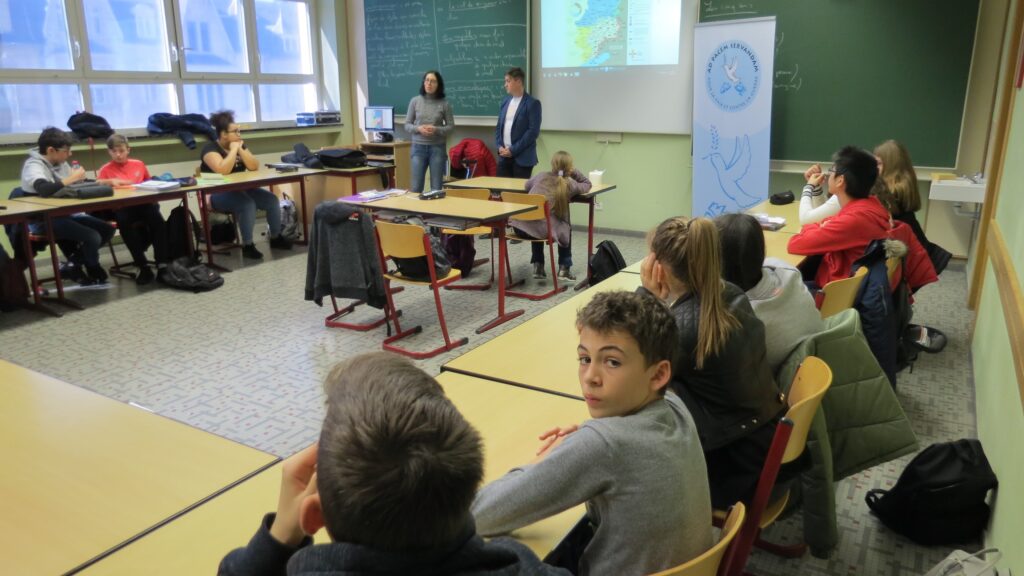
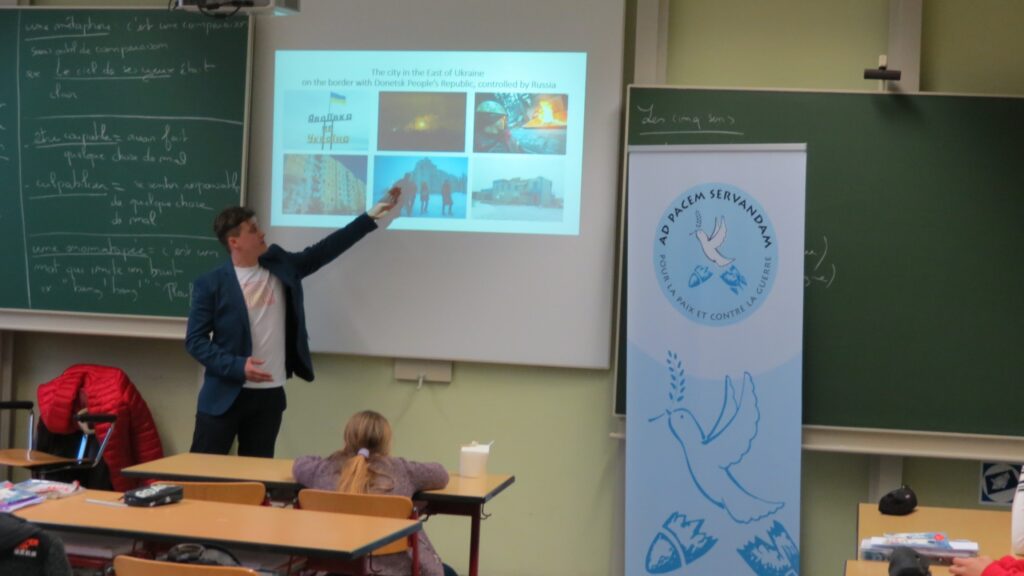
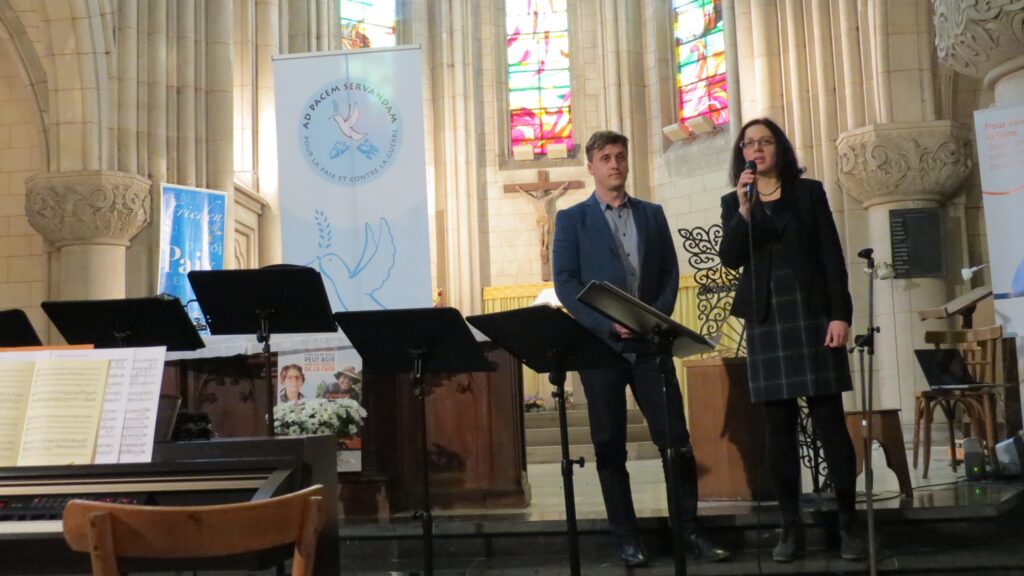
On Saturday, 15 March 2025, at 3 p.m., Claude Pantaleoni, President of the Ad Pacem servandam association, welcomes Mr Nicolas Tenzer and the invited guests to his conference at the Salon du Livre et des Cultures in Kirchberg, Luxembourg. The conference is entitled ‘Our War and the Return of Mass Crime’.
In his introduction, the president presents the Western world and Europe, which currently appear to be weaker than most people think or are willing to admit. This weakness can be observed on a daily basis in the constant back-and-forth among European politicians, who seem unable to determine how to stop Russia’s military aggression against the Ukrainian people.
The atrocities committed by Russia against Syria and Ukraine to date are sufficient to condemn the Putin regime for crimes against humanity and acts of genocide. Yet when Russia’s war in Chechnya is also taken into account, it becomes clear that such crimes have been committed for decades without leading to concrete consequences.There are (international) bodies that say these are crimes against humanity, but nothing concrete is being done. How, then, can we understand that our Western democracies, which call themselves champions of human rights and their defence, continue to argue this way, even though in reality they are doing nothing? For decades, they have been proclaiming loudly that there must never be another Auschwitz. How could Europeans have reached such a low point after the terrible experiences of the Second World War?
To address these questions and the current situation in Europe marked by major challenges for humanity, the Ad Pacem committee decided to invite Nicolas Tenzer, author of the recently published book Notre guerre. Le crime et l’oubli. Pour une pensée stratégique (Our War. Crime and Oblivion. For Strategic Thinking). The author of the book is known for speaking truths that many conceal, naming those responsible (for wars) and providing accurate analyses that expose political failures and their veiled responsibilities, as is the case with the war in Ukraine.
The president asks whether it is reasonable to wonder if the return of mass crime means that history is repeating itself. However, many respond that this is not possible because the Western world is driven by the dynamics of progress.
The speaker’s three books are then presented, which will be available for purchase on site after the conference.
– Les valeurs des modernes (The Values of Modernity), published in 2003
– Quand la France disparaît du monde (When France Disappears from the World), published in 2008
– Notre guerre. Le crime et l’oubli. Pour une pensée stratégique (Our War. Crime and Oblivion. For Strategic Thinking), published in 2025
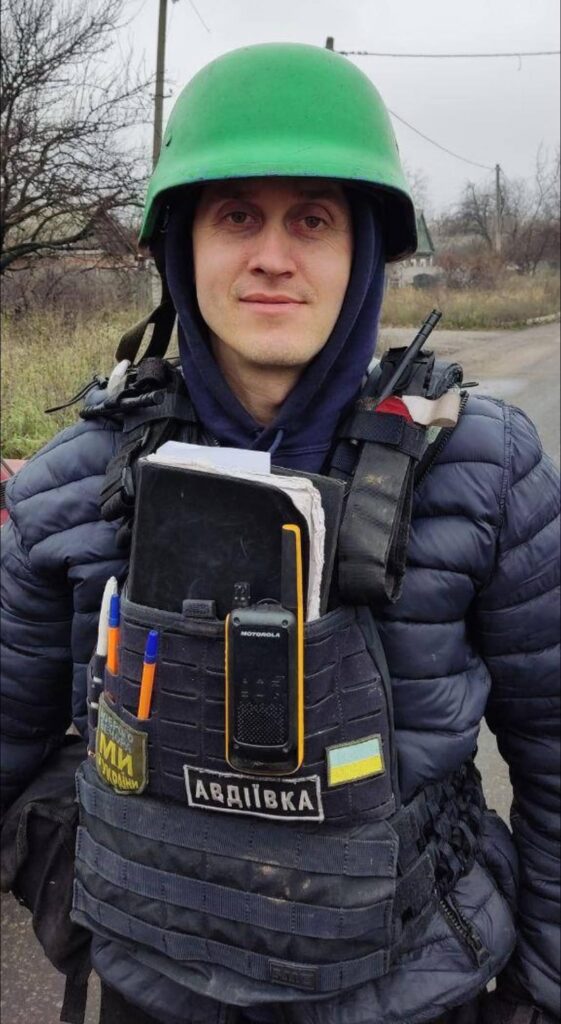
A minute’s silence for Oleksij Savkevich
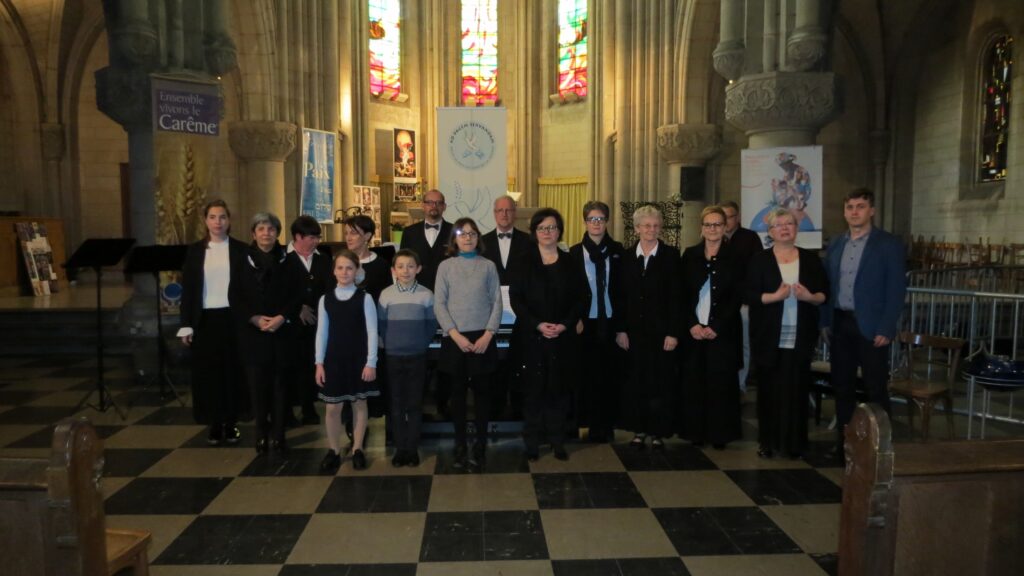
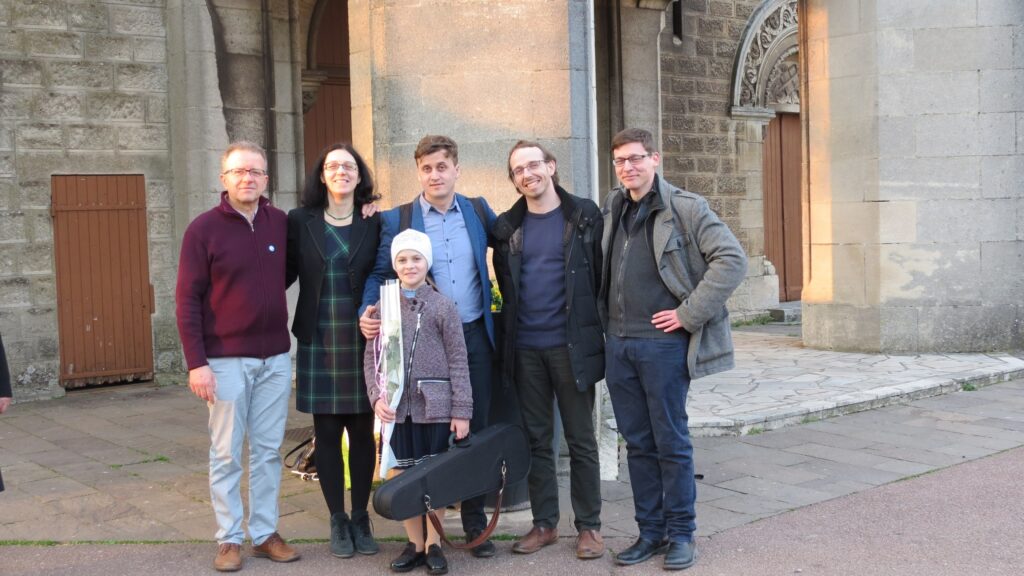
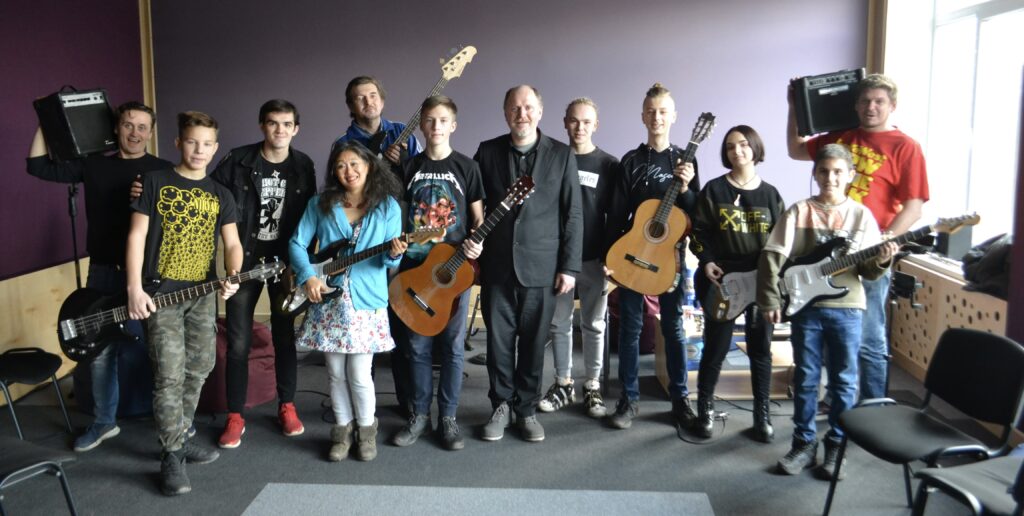
Before Tenzer takes the floor, the president of Ad Pacem servandam recalls that on the same day he received news of the death of a friend of the association, Oleksij Savkevich, who had also been invited to Luxembourg a few years ago and has now fallen on the front line near the city of Dnipro. The president says he is both, mentally and spiritually in , and hands over to Natalya, the vice-president, who knew Oleksij well, to introduce him briefly:
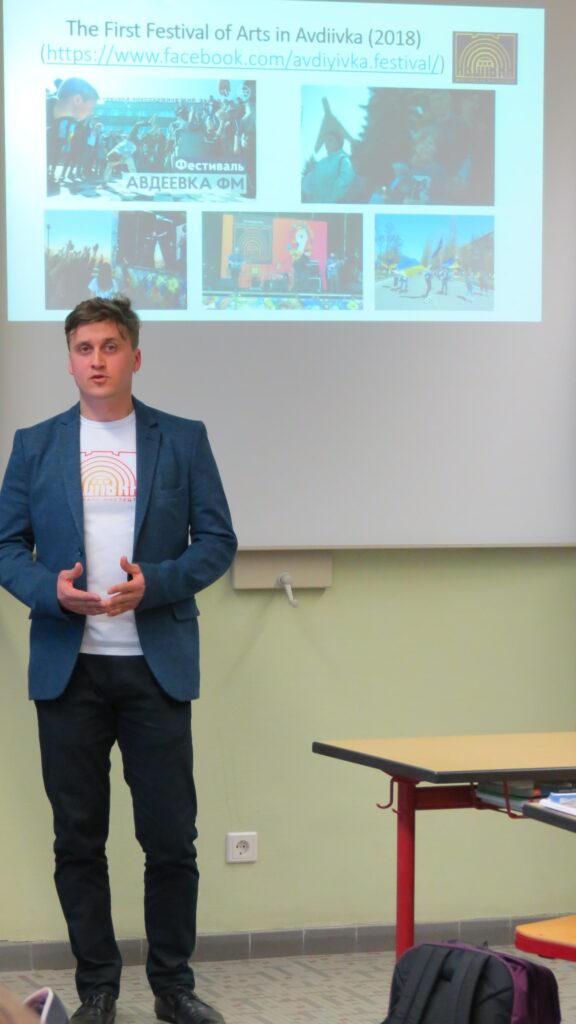
” Some of you may remember Oleksij, who came to a charity concert with his daughter to raise funds for a small group of musicians and to help organise the Ukrainian festival in Avdiivka. This city has since been destroyed by the Russians, and unfortunately Oleksij is now gone as well. He dies, like so many soldiers and civilians who die every day in this terrible war. I propose that we begin this meeting with a minute’s silence, not only in memory of this particular victim, but of all the innocent people currently being mourned in Ukraine.”
(1 minute of silence)
The President then gives the floor to Mr Tenzer.
Mr Tenzer thanks the organisers for the invitation and welcomes all those who have come to this conference.
For him, Oleksij’s murder is undoubtedly painful news, but relevant as an introduction to his conference and his remarks.
Russia’s war of extermination against the Ukrainian people
Russia’s war against Ukraine is first and foremost a war that kills on a massive and deliberate scale. It is a war that kills both civilians and soldiers. Thousands of children, women and men are being murdered because they are Ukrainian. This recalls of past episodes in history, when the Nazis killed Jews because they were Jews, when the Turks killed Armenians because they were Armenians, or when the Hutus in Rwanda killed the Tutsis because they were Tutsis. Russia is currently waging a war of annihilation against Ukraine. Tenzer recalls the words rightly spoken by the President of Ad Pacem in his introduction: for twenty-five years, since Vladimir Putin came to power, hundreds of thousands of people have been killed by the Russian state. Hundreds of thousands of people in Chechnya, Georgia, Syria (where Russia has killed more Syrian civilians than IS) and, since 2014, in Ukraine through the invasion of Donbass and the so-called invasion of Crimea. Incidentally, one must be wary of the fiction of separatists in Donbass often portrayed in the media. The reality is that since 2014, Russians have invaded Donbass to murder people there. Fourteen thousand people (14,000) were killed between 2014 and 24 February 2022, the start of total war. It is a long list of crimes, each of which has a face. Beyond these direct murders, there is also mutilation. Ukraine is a country of mutilated people, of soldiers who have lost their arms, legs, eyes and faces. But civilians are also deliberately targeted in the bombings. These are not collateral damage or mistakes, but the Ukrainian population is being deliberately targeted in the bombing of residential buildings, markets, hospitals, maternity clinics, playgrounds and railway stations. And it must be remembered that in the areas occupied by Russia (about 20% of Ukrainian territory), mass rapes take place every day, because rape is also a Russian weapon of war, just like torture. In every village conquered by the Russians, the occupiers set up torture chambers. Executions take place there, sometimes even of children in front of their parents. All of this is thoroughly documented. Then tens of thousands of Ukrainian children are deported to Russia, be torn away from their parents and families, to be Russified, to be prepared for the war they will one day wage against their own people, children whose identity is being erased and whose history is being destroyed. It should be remembered that, according to the 1948 Convention on the Prevention and Punishment of the Crime of Genocide, this is an act of genocide. In fact, at the Nuremberg trials of the representatives of Nazi Germany, four categories of crimes were established and incorporated into international law: war crimes, crimes against humanity, genocide and war of aggression. These four categories of crimes are being committed by Russia. Russia has also systematically bombed hospitals, schools and markets in Syria. When schools and markets are bombed, rescue workers rush to the scene to save lives, clear up the debris and search for signs of life amid the rubble. And in Ukraine, as in Syria, the Russians are using the so-called second strike to cause even more casualties. Not only were the first victims killed and maimed, but the rescue workers themselves were also attacked afterwards. This is repeated systematically, adding one crime to another, one atrocity to another.
Destruction of cultural and religious heritage
What further reinforces the genocide thesis is the fact that Russia is also systematically targeting cultural and religious heritage (including churches). Inventories have been made of all these monuments, these old houses, these cemeteries, very often Orthodox, Christian, Jewish and Muslim cemeteries, which have been systematically targeted by Russian attacks. Here, too, the Russians are driven by the desire to simply destroy the Ukrainian people, their culture and their existence. Within multi-ethnic and multicultural Ukraine, one population group in particular is under attack: the Crimean Tatars, a Muslim population group that was deported en masse by Stalin in 1944 and almost exterminated. Since 2014, this ethnic group has been relentlessly persecuted with arrests, deportations and executions, but also with the desire to erase the very heritage of the Crimean Tatars, who are an integral part of the Ukrainian people. All of this is being carried out systematically and deliberately, but also documented. And as if that were not enough: It is well known that Russia systematically takes Ukrainian prisoners of war, who are then deported to Russia. Some are executed on the spot, which is a complete violation of the Geneva Conventions; others are systematically tortured and starved. During prisoner exchanges, because Ukraine values every single life of , the returning prisoners are traumatised by everything they have suffered. Some have lost their memory or their language, others have lost thirty kilos, and the traces of the abuse they have suffered are visible on their bodies.
After Auschwitz, after Srebrenica, people said, ‘Never again!’ Tenzer reminds us that we can also think of the other mass murders that marked the 20th century. In the 21st century, we are experiencing exactly the same thing, the will to systematically and ruthlessly exterminate a people. In light of this, Tenzer points to a troubling silence, despite the fact that warnings about Russia’s practices have been issued for over twenty years. He explains that this is a state with which it is impossible to find even the slightest compromise, with which it is impossible to negotiate. One only has to look at how Putin came to power as prime minister in 1989. He ran for president to replace Boris Yeltsin. Fearing he would not be elected, he tried to rally the nation around him by starting the Second Chechen War. What was the trigger for this Second Chechen War, what was the starting signal, the trigger, and who orchestrated it all? Three buildings in the Moscow region were destroyed by bombs, killing about three hundred people. Putin immediately said that Chechen terrorists were responsible. Putin then said, ‘We must hunt down the terrorists to their toilets.’
But the reality, Tenzer explains, is very different. It is agents of the FSB, the Russian security services, who carry out these bombings in order to provide Putin with a pretext to start the war.
The bloody rise of the mafioso Putin
The emergence of the current Russian regime is therefore a bloody story in which the secret service did not hesitate to murder three hundred Russian citizens in order to pave the way for the mafioso Putin to come to power. British journalist Catherine Belton’s book Putin’s People (published in 2021) traces the entire genealogy of his career. Before Putin came to power, he was a KGB agent stationed in Dresden, a large city in the GDR , with the aim of destabilising the FRG. Putin himself played an interesting role at the time by supporting a group called the ‘Red Army Faction’ (RAF), a German terrorist organisation that carried out attacks on German soil. Putin’s political rise was bloody. He allied himself with all the mafiosi from the underworld of St. Petersburg who traded in weapons, drugs, women, etc. Then came the rise, until he became an employee of Mayor Sobchak of St. Petersburg, who later regretted helping him. Tenzer says he doesn’t like to refer to Putin as president, preferring to call him Toto Rina, the big boss of the Sicilian Mafia, one of Italy’s bloodiest mafiosi. And that is the reality of the Russian regime: a regime based on bloodshed and the exploitation of wealth. While there was corruption under Eltsin, Putin has only exacerbated this corruption within Russia thus caused more suffering to his own people.
According to Tenzer, Russia’s mass crimes must be talked about, and he personally regrets that most (European) heads of state and government do not do so. He himself belonged to a small group of intellectuals in France who called for a boycott of the 2018 World Cup in Russia. They wondered how it was possible that Western heads of state and government were willing to travel to Russia to shake Putin’s hand, address him informally and, as some did, congratulate him on the exceptional organisation of this World Cup, while the cheers of the fans drowned out the cries of the victims. That is the reality of what happened at the time. There is a kind of whitewashing going on here, because we must remember that Western leaders did not react in 2008 when Russia conquered 20% of Georgian territory, specifically Abkhazia and South Ossetia. Nor was there any reaction in Syria in 2013 when Bashar al-Assad, Putin’s ally, attacked his own people with gas when Obama refused to insist on the red lines he himself had set . In 2014, there was no intervention in Ukraine, nor in 2015 and 2016, nor during the siege and fall of Aleppo, even though many of us in France, Europe and even the United States called for the establishment of a no-fly zone. A complete lack of response can be seen in 2009, a year after the war against Georgia, when the G7 wanted a fresh start in American-Russian relations. And then in 2017, there was the trust and security project with Russia to try to reintegrate Russia.
At the same time, with the complicity of Germany and France, the Nord Stream 2 gas pipeline project moves forward, a project that would make Germany even more dependent on Russian gas. Former German Chancellor Gerhard Schröder sits on the board of Gazprom and on the boards of several Russian companies. There is thus a long list of European accomplices to the Russian regime, despite the mass crimes it has already committed.
False friendliness towards Russia
In 2014 and 2022, some politicians said that perhaps we needed to talk to Putin, that we needed to give Russia security guarantees, and that it was possible that we Europeans were partly to blame. All the old clichés of Russian propaganda resurfaced, claiming that NATO should not have been expanded or that promises had been made not to expand it eastwards. But no such promises were ever made, for the simple reason that at the time they were supposedly made, the USSR still existed. Some even said that we had to acknowledge or understand the Russians. There is a term in German that expresses this well: ‘Putinversteher’ (understanding Putin), i.e. understanding the fact that Russia feels surrounded. But in reality, the West has repeatedly reached out to Putin. When the Single European Act was signed in 1997, there was an agreement between NATO and Yeltsin’s Russia that remained in force until 2014. Tenzer also mentions the European Union’s policy, which was referred to as the ‘Russian first policy’, i.e. the priority given to Russia. European politicians travelled to Russia six times a year to talk to the Russians; they did not travel to Ukraine or Georgia once. There was a kind of fascination with Russia that had gripped the elites of France, Germany, the US and several other countries. And every time, Russia’s crimes were completely ignored at the meetings.
What has happened since 24 February 2022, the date of the full-scale invasion of Ukraine, which Tenzer describes as Russia’s war of annihilation against that country? Some speak of a European awakening, but Tenzer considers this awakening, after three years of war, to be a minor one, more like a state of drowsiness. Western countries have provided aid to Ukraine and tightened sanctions against Moscow. But according to the speaker, those same Western countries have stopped halfway. The reality is that the Americans and Europeans have supplied Ukraine with weapons to prevent Russia from completely conquering the country. They have given this country certain means of defence, but only slowly and gradually. There was even a surreal and completely scandalous debate about not supplying Ukraine with offensive weapons. They only wanted to give it defensive weapons, even though it is difficult to always distinguish between the two. This was because they did not want to risk escalation. They are avoiding confronting those responsible for their crimes! And they talk about not risking a war between NATO and Russia, as the Biden administration said. This is the story we always hear: ‘We must not risk a Third World War.’ For Tenzer, like everyone else, this narrative comes from the Kremlin’s playbook, which primarily propagates two types of intimidation propaganda. There is this hard propaganda and then there are the seemingly much more moderate statements that boil down to blaming NATO or risking a nuclear catastrophe. And little by little, some Western leaders have been persuaded by these narratives. For Tenzer, this is very disturbing. At one point, European leaders even appeared to accept Russia’s red lines: ‘You must not touch Crimea; if you attack Russian soil, there will be a nuclear war.’ But the Ukrainians are doing this more and more often, and according to the speaker, they are absolutely right to do so, and he himself regrets that they are not being helped to do even more. They are doing this on their own, thanks to their intelligence and technological ingenuity. The West’s fears have not come true!
A insidious argument that is currently widespread is the one taken up by a number of journalists, unintentionally or out of ignorance, which claims that Russia is too big to fail. In fact, according to Tenzer, this country is doomed to decline within the next ten, twenty or thirty years, without it being possible to say exactly when this will happen. Demographically speaking, it will collapse. The economic situation in Russia is not exactly rosy, with an inflation rate of 20% and a key interest rate of 21% set by the Russian Central Bank. Loans for businesses and individuals are at 25% and 30% respectively. The state of the infrastructure (schools, hospitals, etc.) is not good, and Russia was one of the countries hardest hit by COVID-19. The country has little chance of recovering quickly, and the Russian people are not to be envied.
Europe must step up its support for Ukraine
The second thesis is that the Ukrainians cannot win. But according to Tenzer, the reality is that what the Ukrainians are doing is proving effective. Because Europe has not supplied enough weapons to Ukraine, Russia has conquered about 3,865 km² in 2024, or 0.6% of Ukrainian territory. However, if this continues at this pace, it would take Russia 80 years to conquer the whole of Ukraine. Despite the eight-month interruption in American intelligence information, the Ukrainians still managed to attack the world’s second strongest army on Russian territory in Kursk. It can be considered a success that 1.5 million drones were produced in 2024 and that around three million are to be produced in 2025, in addition to 30,000 long-range drones and 4,000 missiles. Everything is manufactured by the Ukrainians themselves, not by foreign companies. There is no reason to believe that Ukraine could be defeated. However, European engagement on its side must go even further.
As for the Western sanctions since 2014, there has been too much negative propaganda and reservations that they would harm European farmers, producers and industrialists. There have been repercussions, but no long-term global damage. The same was true of all the sanctions imposed in the following years.
‘The friendship between Trump and Putin’ distorts everything
It must also be acknowledged that Europe continues to import Russian liquefied natural gas and other fossil fuels today. Europe has not imposed secondary or extraterritorial sanctions on a number of countries such as India, the United Arab Emirates and China, which continue to trade with Russia. It is also known that products with European or American dual-use components continue to reach Russia via a number of countries such as Kazakhstan and Kyrgyzstan. All of this is dishonest. Furthermore, Europe is now at a political turning point due to Donald Trump’s inauguration. It is well known that he has long-standing financial ties to Russia, dating back to before Putin’s time.
The Russians have saved Trump’s real estate empire from total bankruptcy on several occasions, so he is indebted to them. Perhaps even more dangerous, when you look at the current American team surrounding and advising Trump, is the similarity between Trump’s and Putin’s ideologies. Neither of them distinguishes between victims and perpetrators, between aggressors and the attacked, between international and national law. Both believe that borders can be redrawn by force, thereby violating all the legal provisions of the OSCE Charter or the 1990 Charter of Paris. So we are dealing with the same ideology and indifference to the truth that some call the post-truth era. There is a certain ideological convergence between America and Russia. Incidentally, Trump’s America voted against the United Nations resolution that designated Russia as an aggressor, along with a minority consisting of North Korea, China, Israel and a few other countries.
Trump’s peace prepares for the next war
Then we saw Trump, who first wanted to make peace in one day, then in three months!
Yet the peace Trump proposes is a peace that prepares the next war because it is based on forgetting the mass crimes committed by Russia, a peace that buries the seventy thousand victims of Mariupol, the victims of Bucha, the victims of Izium and other places, a peace that ultimately says that Russia can keep the territories, even though it is known that in all the territories occupied by Russia, torture, executions, mass rapes and deportations of children take place.
Will Europe give Mr Putin a licence to kill, just as some people get a hunting licence? Do Western democracies have the right to do that? Even if morality and human dignity do not matter, if the punishment of crimes does not matter, one can still think about the security of Europe.
The peace that Trump is making with Putin is a false one, because Putin has already violated hundreds of international agreements and conventions.
This means that we Europeans will be next on Putin’s list. We can expect cyber attacks on hospitals and traffic and railway regulations, which could lead to collisions between cars and trains. Terrorist attacks and acts of arson in Europe would become more likely.Putin’s goal is to destroy the basic rules of our democracies. He could succeed if he has the opportunity.
Today, peace with Putin is impossible. There is no other solution than victory over Russia. This is possible, but it requires political will and an awareness of what is currently brewing. If we are not aware of this, our democracies will be destroyed from within. There are political forces pushing in this direction and proposing a model other than that of liberal democracy and freedom. In the war that is currently being waged, Europeans must win. A Ukrainian MP said: ‘If we continue the fight, thousands of us will die. If we stop fighting, it will be millions.’ “
Questions from the audience
Question: Are European leaders aware of the great danger posed by the Putin regime and the mass crimes it is currently committing, or are they ignoring it?
Tenzer replies that European leaders have been slow to realise the real threat posed by Russia. And there is a kind of horror at the radical nature of Russia’s actions.
Added to this is a cognitive dissonance between awareness of the danger and repression of the absolute nature of the war. And there is a temptation to repeatedly reduce this war to a form of classic warfare, even though this was never the case. There is an awareness that a war has never been won by avoiding it. It is understandable that this is something frightening and tragic for leaders. That is why some leaders hesitate to call the mass crimes committed by Russia by their name.
Question: There is frequent talk that we are risking a third world war. Is this a real possibility or is it an excuse not to get more involved and defend the Ukrainians more?
This narrative was invented primarily by Russia for domestic political reasons, so that the Russian people would rely on fairly old patterns and ideologies. This is what Vice President Medvedev and the so-called Patriarch Kirill are doing when they talk about the four horsemen of the apocalypse, salvation and Russian soldiers who are killed and go to heaven to enjoy the company of virgins, as the jihadists of Islamic State do. Here, parallels can be drawn between Islamist radicals and today’s Russia.
Tenzer considers the fear of a third world war with nuclear weapons to be unrealistic for the simple reason that Putin also values his life, considering all the precautions he takes (when he travels, he takes his own food with him, long tables to entertain his guests during Covid, etc.). These are behaviours that are unknown to other leaders of world powers such as Trump or Xi Jinping. Putin is fuelling paranoia; he is tormented by an incredible fear of death. Tenzer considers this to be more of a rhetorical argument, even if there is no such thing as zero risk. Even Biden had admitted that the risk was very low.
In the event of a third conventional world war, Tenzer believes that Russia would not last two days when comparing Russian forces with those of NATO.
Question: How can we understand the paradox that Russia would not survive two days in a conventional war with NATO, while at the same time Russia poses a threat to Europe?
To return to the paradox, according to Tenzer, we must first consider the mass crimes committed by Russia. Denying these mass crimes is like denying the Holocaust or the Armenian genocide or the genocide of the Tutsis by the Hutus. That is negationism. Anyone who does not acknowledge these mass crimes is on Russia’s side. From that point on, the negationist can say whatever he wants, but his words are completely invalid.
There is indeed a paradox. Today, Russia appears weak, especially when compared to the image it had of itself as the world’s second-strongest military power. It has had problems on the ground in its war against Ukraine and may well be defeated. But it is strong in comparison to our weakness. Because we did not supply Ukraine with enough weapons, we did not intervene in Georgia, we did not stop the mass crimes it committed in Syria. This has made it stronger. If the West had intervened in 2008 to stop Russia’s advance, we would not be in this situation today. And hundreds of thousands of victims would have been saved. Tenzer wants to stand on the side of those who were deliberately murdered by Russia.
If we give Russia three or five years now and the US lifts the sanctions, it will become even more dangerous. It will rearm itself and the West’s credibility in terms of its deterrence capability will decline. The risk of a stronger Russia will increase. That is an economic and military reality.
Today, there is a real chance to defeat Russia militarily in Ukraine. If we do not do so, Russia will become stronger and pose a much greater threat than it does today.
Question: To what extent does the Russian-Ukrainian conflict challenge Clausewitz’s traditional model of war?
If there is to be peace between Russia and Ukraine, it could be a Westphalian peace treaty that seeks a certain balance of power. Then Russia’s power would have to be reduced in order to weaken its desire for expansion.
Tenzer answers the first question by saying that there is no real model of war in this Russian-Ukrainian war. Every war is different, even if each one takes on characteristics from past wars.
Looking at the war from 2014 to 2022, it was already a war of annihilation, partly aimed at destroying the Ukrainian people, even if it did not reach the scale of a total war as it has since February 2022.In addition to the military, the civilian population is now also being targeted, and the Russians want to completely subjugate the country. At the same time, the Russian side is trying to spread a series of narratives that are increasingly invasive, more so than the combatants of previous wars were able to do. Russian propaganda is much more dangerous than Nazi propaganda, partly because it has technologies at its disposal that did not exist at the time of the Second World War. The use of drones is very prevalent in this war, as they are a decisive weapon on the battlefield.
Tenzer answers the second question by saying that there are good examples of peace treaties concluded after 1945. One example is the peace treaty between Germany and the Allies. Since Germany had become a democracy and was subject to arms restrictions, it was possible to conclude a peace treaty. But a peace treaty with today’s Russia would only be a promise of a new war. Russia has violated more than a hundred international treaties and conventions.
A peace treaty with today’s Russia is the opposite of a peace treaty. When it comes to giving Russia the opportunity to start over, it is nothing more than a tragic game whose consequences in terms of human lives will be terrifying.
Question: During these three years of war, it is said that Ukraine must not win and Russia must not lose. With the United States under Trump, we find ourselves in this paradigm, and one has to wonder how long this will continue. Will there be paradigm shifts?
Tenzer believes that the situation will not improve with Trump. Most Western leaders consider a Ukrainian victory highly unlikely, and the West must try to keep the situation under control so that it does not worsen. The speaker considers this attitude unjust and, in a sense, criminal. Europe is not helping Ukraine enough. Western leaders are responsible for allowing these crimes to happen in Ukraine. They could have saved thousands and thousands of lives. They did not want to. He himself feels guilty because he did not do enough to convince Western leaders to act differently. But there are also leaders from the Nordic and Baltic countries who say the same thing as him: ‘We must help Ukraine not only for as long as necessary, but until victory!’
The only real way out for Tenzer is Ukraine’s victory and Russia’s defeat. So a paradigm shift must take place. For most heads of state and government, it is clear that there is no middle ground and that the status quo is not desirable. Even if we are not there yet, Tenzer remains confident that the West will manage to change in the right direction.
The EU must counteract Trump to prevent a false peace. Added to this is the problem of the Security Council, where the balance has shifted from three against two to two against three (Russia, China, USA). Unfortunately, the USA is currently changing its position and aligning itself too closely with Russia and China. According to Tenzer, Trump wants to get too close to Russia. And the EU must do everything it can to prevent a false peace. Because there is no rationality in the minds of Trump and J.D. Vance. That is why Europeans must resist. Even with Obama and Biden, Europeans knew that the Americans could not be trusted. But now, with Trump, the Americans have quickly and clearly changed sides. Some expected this, but many are frozen in their critical stance.
Question: A question not directly related to the war in Ukraine. Must Europe take a stand if China attacks Taiwan to annex it?
Where does China stand on the war in Ukraine? Tenzer believes that China is currently completely on Russia’s side. Xi Jinping also shares the view that the basic rules and laws of the world order must be destroyed. He differs significantly from his predecessors. Europeans must realise that China is actually supporting Russia (purchasing oil, selling weapons, etc.). Europeans must be much stricter and oppose the Chinese in terms of investment. Trump will completely distance himself from Taiwan, just as he mocks Tibet, the Uighurs and Hong Kong, just as he mocks Ukraine. Europeans have the means to oppose Russia in Ukraine in terms of their capabilities. Tenzer is less optimistic about the forces available to counter China if it wants to take Taiwan, given the balance of power.
Question: France also has a presence in the Pacific. If the US does not intervene in Taiwan, France will have to make a decision. Is France currently losing power in the Pacific region?
For Tenzer, the real question is whether European nations will be able to forge alliances with nations in the Pacific region such as Japan, South Korea, Australia and Taiwan over the next ten years. However, given China’s strength, Europeans will not be able to do much, considering that the Chinese navy has surpassed the power of the US Navy. There is a lot at stake.
After this final question, the president of Ad Pacem closes the conference by saying that Mr Tenzer has made it clear why Europeans are involved in the war in Ukraine. They are facing a war that will last for years.
Europeans are slowly waking up and gradually realising that the time of peace in Europe and its surroundings is over. At present, it is still unclear how peace can be achieved in Ukraine with the Russians. An agreement cannot allow Russian leaders to go unpunished, even though they have committed numerous crimes against the Ukrainian people. That would be a bad new beginning.
The President of Ad Pacem thanks Tenzer for coming to Luxembourg to provide insight into the issues of war and peace in Europe, and thanks everyone who participated in this conference.
Summary
At the invitation of the association ‘Ad Pacem servandam’, Nicolas Tenzer gave a lecture on Saturday, 15 March 2025, at the book and culture fair in Luxembourg-Kirchberg. The topic was ‘Our war and the return of mass crime’.
Before the president of the association gave Tenzer the floor, the speaker asked for a minute’s silence for Oleksij Savkevich, a Ukrainian friend whom the association had invited to Luxembourg a few years ago and who was killed on the Russian-Ukrainian front.
For Tenzer, the murder of Oleksij serves as an introduction to his lecture and to what he wants to say about this war. Indeed, it is first of a war in which Ukrainian soldiers and civilians are being killed and deliberately, reminiscent of other well-known genocides (the Nazis against the Jews, the Turks against the Armenians, the Hutus against the Tutsis, etc.). Since Putin came to power in Russia, hundreds of thousands of lives have been sacrificed in Ukraine, Chechnya, Syria and Georgia. Ukraine is now a country of mutilated people, of soldiers who have lost their arms, legs, eyes and faces. Every day, mass rapes and torture take place in the villages conquered by the Russians, as rape is also a weapon of war. International law is being trampled underfoot: war crimes, crimes against humanity, genocide and an offensive war are being committed by the Russian state. These actions are repeated systematically, a new crime is being added to crime, another atrocity to the already existing atrocity.
What further supports the thesis of a genocide being perpetrated in Ukraine is the destruction of cultural and religious heritage by the Russians. The Russians are driven by the desire to destroy the Ukrainian people, their culture and their existence. Ukrainians who are freed in prisoner exchanges report that they have been systematically tortured.
For Tenzer, Russia is a state with which it is impossible to find even the slightest compromise, with which it is impossible to negotiate.
Putin’s political rise to absolute power was bloody. In the beginning, he allied himself with all the mafiosi from the underworld of St. Petersburg who traded in weapons, drugs, women, etc. This therefore reveals the true nature of the Russian regime: a regime based on human blood and the exploitation of wealth. Putin’s Russia has also not stopped inflicting suffering on its own people.
Tenzer criticizes the kind of self-justification on the part of Western heads of state and government since all the aggression and occupation of foreign territories made by Russia in recent decades. There is a long list of (European) accomplices to this Russian regime, despite the mass crimes it continues to commit. Some even go so far as to say that we must understand the Russians, understand that they feel surrounded by NATO and are responding with war.
The Americans and Europeans have supplied Ukraine with military equipment for defence, but only slowly and gradually, arguing that we must not risk escalation. This avoids looking at those responsible for the crimes directly in the face. Then there are appeals not to ‘risk a Third World War’. Like all the other arguments, this appeal comes from the Kremlin’s playbook. All these fears on the part of the West are regrettable and have not come true.
Because Europe did not supply Ukraine with enough weapons, Russia conquered 3,865 km² in 2024, i.e. 0.6% of Ukrainian territory.
As for the Western sanctions since 2014, there has been a lot of negative propaganda and reservations that they would harm European farmers, producers and industrialists. There have been repercussions, but no long-term global damage.
And one must be aware of the facts that Europe still imports Russian liquefied natural gas and fossil products today, and that Europe has not imposed secondary or extraterritorial sanctions on countries such as India, the United Arab Emirates and China, which continue to trade with Russia.
It is well known that Trump has had long financial ties to Russia, dating back to before Putin’s term. The Russians have saved his real estate empire from total bankruptcy on several occasions, so he is indebted to them. What is perhaps even more dangerous, when one looks at the current American president’s advisors and team, is the complete alignment between Trump’s and Putin’s ideologies. Neither of them distinguishes between victims and perpetrators, between aggressors and the attacked, between international and national law. Both believe that violence makes it possible to redraw borders, violating all the legal provisions of the OSCE Charter or the 1990 Charter of Paris.
Then we saw how Trump wanted to make peace, first in a day, then in three months!
But Trump’s peace is a peace that prepares for the next war because it is based on forgetting the mass crimes committed by Russia, a peace that buries the seventy thousand victims of Mariupol, the victims of Bucha, the victims of Izium and other places/locations, a peace that ultimately says that Russia can keep the territories, even though we know that torture, executions, mass rapes and deportations of children are taking place in all the territories occupied by Russia.
Do Western democracies have the right to allow all this? Even if morality and human dignity do not matter, if the punishment of crimes does not matter, one should still think about the security of Europe.
Tenzer reiterates that peace with Putin is not possible today. There is no solution other than victory over Russia. This is possible, but it requires political will and a clear understanding of what is currently unfolding. If we are not aware of this, our democracies will be defeated from within. There are political forces pushing in this direction and proposing a model other than that of liberal democracy and freedom. A Ukrainian MP said: ‘If we continue the fight, thousands of us will die. If we stop fighting, it will be millions.’
For Tenzer, the only real way out is for Ukraine to win and Russia to lose. Therefore, a paradigm shift must take place. For most heads of state and governments, is it clear that there is no middle ground and that the status quo is not desirable. Even if we are not there yet, Tenzer remains confident that the West will manage to change in the right direction.