


Our guest at the 20th “Salon du Livre et des cultures du Luxembourg” – Gabriel BECKER
Saturday, February 29, 2020 at 3:30 pm
LUXEXPO KIRCHBERG LUXEMBOURG, 2nd floor
“The BAN SAINT-JEAN: Fighting for the memory of a Ukrainian and Soviet prison camp in the Moselle”
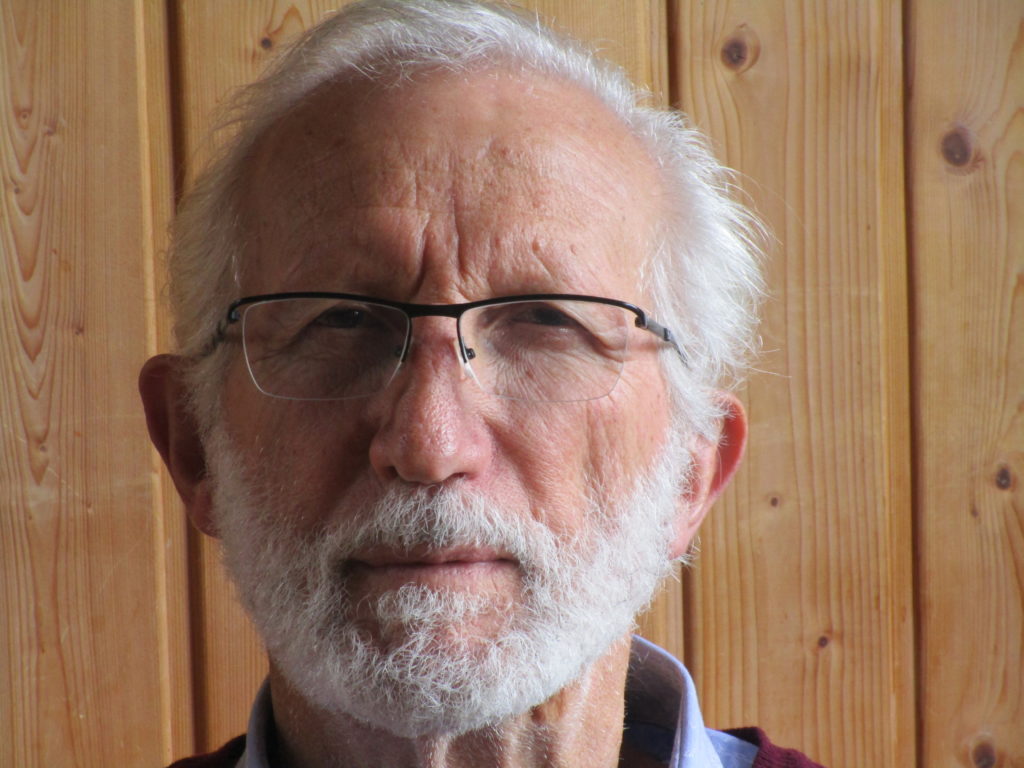
Gabriel Becker, a retired professor of German, has been collecting testimonials, archive documents and memorabilia for the past twenty years to bring back to life the history of this prison camp. He is the author of four books on the subject:
- Le camp du BAN SAINT-JEAN (1941-1944), Lumière sur une honte enf(o)uie
- Le drame ukrainien en France (Moselle) (1941-1944), Mementote…
- Camp du Ban Saint-Jean, Moselle, La Revie
- Camp du Ban Saint-Jean Moselle, Nadejda : Espoir
He is vice-president and co-founder of the Association Franco-Ukrainienne (AFU) for the rehabilitation of the Ban Saint-Jean mass grave near Boulay, Moselle.
During his lecture, he will present the twists and turns of the dark history of this transit camp (300,000 prisoners) and death camp (22,000 dead).
Minutes of our 3rd General Assembly 2020
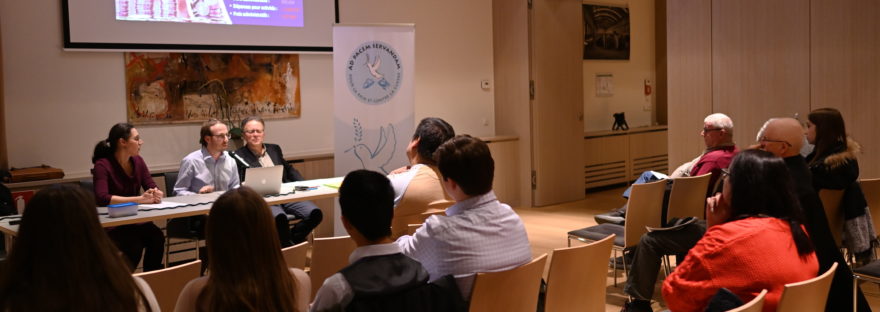
The third General Assembly of our association “For Peace and Against War” was held on Wednesday 5 February 2020 on the 1st floor of the regional cultural centre “Aalt Stadhaus”, 38 avenue Charlotte in Differdange (L).
The president, the vice-president and the secretary were present for the committee, the treasurer being excused, leaving a proxy to the secretary Christian Welter. Sixteen members were present in the room, while twenty-three had sent apologies.
After welcoming everyone, the president gave a detailed report of all the activities, related to the three objectives of the association, that it had organised during 2019.
Musical instruments for young people in Avdiivka
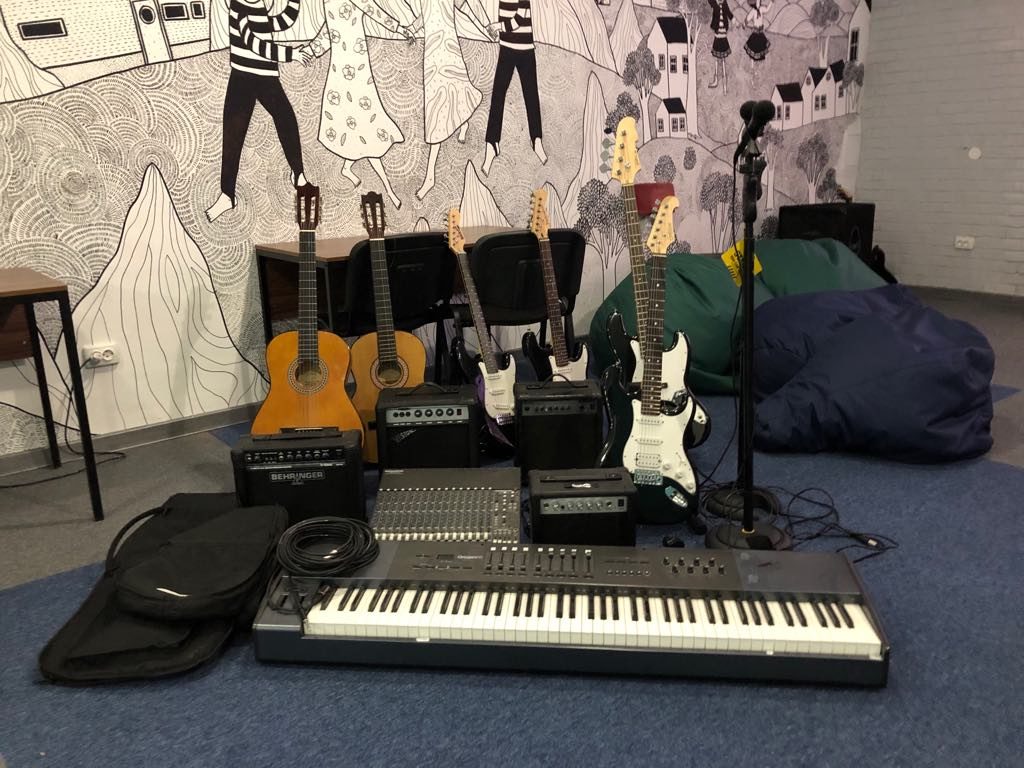
Our non-profit organisation “Pour la Paix et contre la Guerre” financed and sent in 2019 all the musical instruments to a group of young people who want to oppose music to war.
Avdiivka is an industrial town in Ukraine, which borders the town of Donetsk controlled by pro-Russian militias. In the pre-war period, i.e. before 2014, cultural life was mainly concentrated in Donetsk. In Avdiivka there were only factories and dormitory towns. Since the summer of 2014, the inhabitants of Avdiivka have been living close to the front line.
A Ukrainian-patriotic couple, Svetlana and Oleksiy Savkevych, have been working since the beginning of the war to promote leisure activities for the young people of their town. In May 2018, they even managed to organise a festival of Ukrainian culture in Avdiivka.
This festival generated great interest in music among young people. That is why Oleksiy wanted to find and set up a music room for young people. It should be a space where young people could meet each other away from the streets and war, learn from each other and make music together.
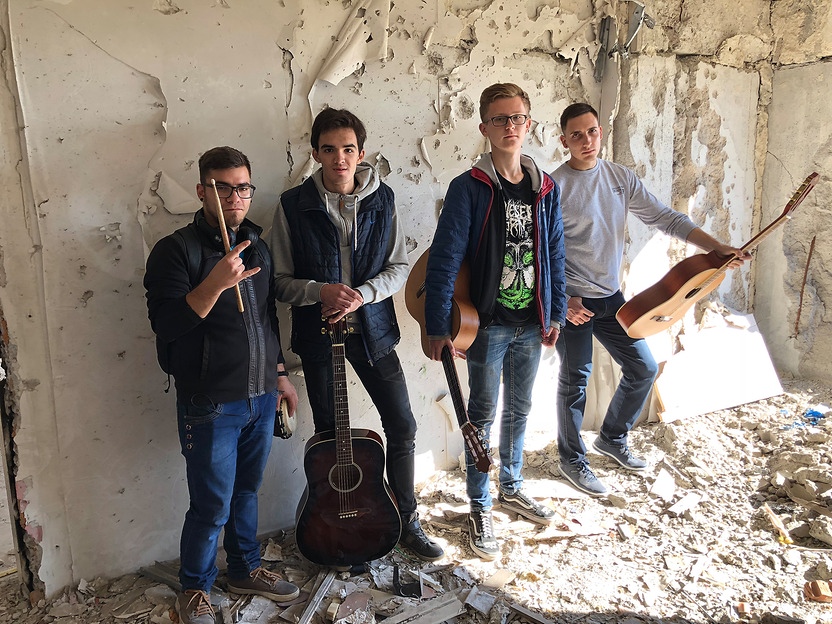
In the beginning, the young people met in garages and abandoned houses and formed a rock band. They had poor quality guitars and only one old drum kit, which a local woman had given them as a gift. Broomsticks were used to hold the microphones. Oleksiy asked the city council and political leaders to give him a room where young people could continue to make music.
In December 2018, our association contacted Oleksiy Savkevich and offered to organise a charity concert for the benefit of young musicians in Avdiivka, so that the instruments could be financed. We then invited Oleksiy and his daughter Marika to our home. On March 24, 2019, we organized a big charity concert in Villerupt (France).
The day before, on 23 March, at the end of the mass in the church of Bascharage, Oleksiy spoke about the dangers and difficulties of daily life in Avdiivka, his hometown near the front. On this occasion, people also made donations to the project.
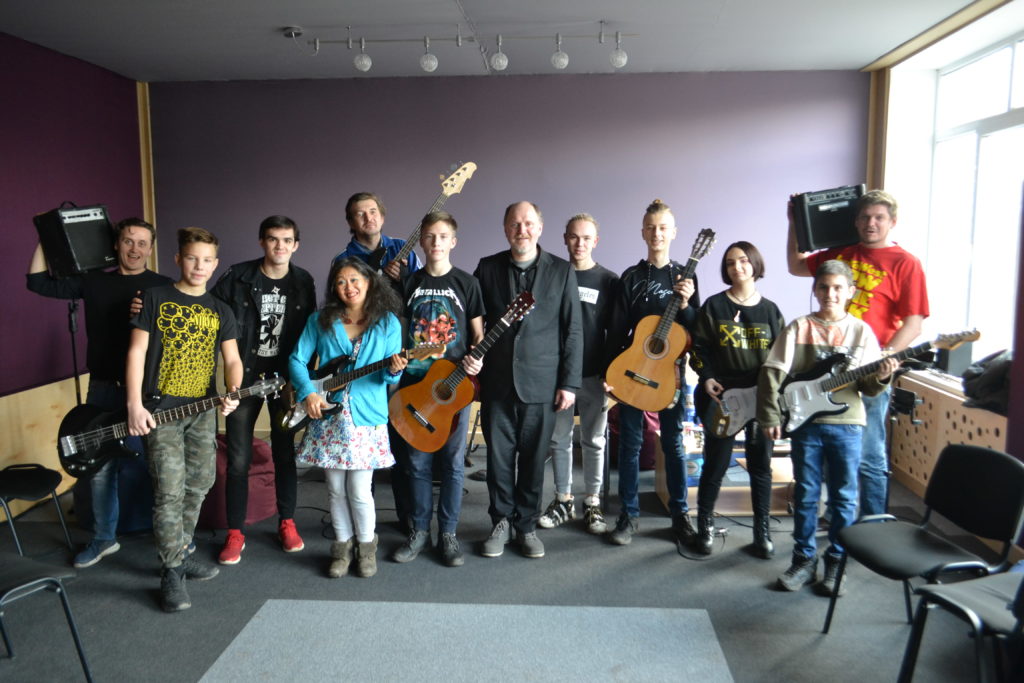
Thanks to the donations from Bascharage and the profits from the charity concert in Villerupt, we were able to buy the following equipment: three electric guitars, two acoustic guitars, a bass guitar, four amplifiers, a keyboard, a mixing table, two microphones, two stands and the necessary cables. The material was sent to Avdiivka at the end of December 2019. In the meantime, a large room in a school in the town has been made available to the young people for their “music room” project. They have renovated this room, and since January 2020 they have been playing music there in peace and freedom.
2020 Calendar with photos of the Peace March
From the end of July to the beginning of September 2019, a young member of our association, Mr. Anselmo Malvetti, undertook a peace march from Lake Geneva to the shores of the Mediterranean. He thus wanted to draw attention to the Russian-Ukrainian war which, since 2014, has caused more than 14,000 deaths and has driven 1.5 million Ukrainians from their homeland. Most of them have taken refuge in free Ukraine.
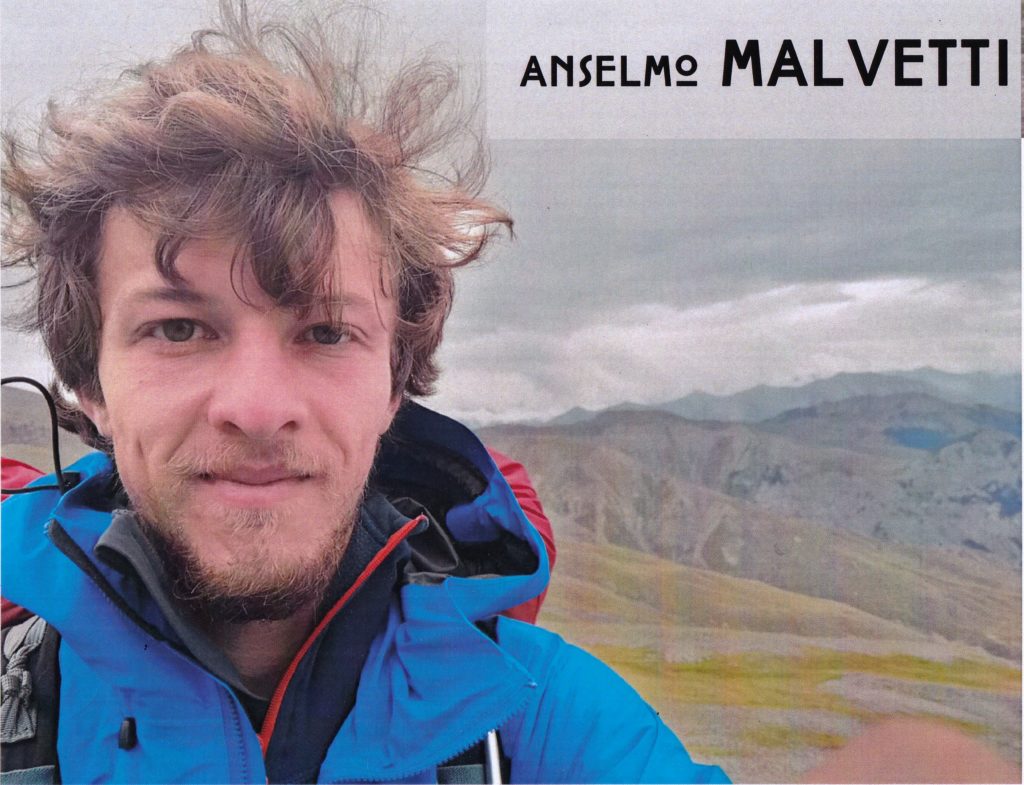
In autumn, Anselmo gave us the twelve most beautiful photos he took during his walk to make a beautiful calendar for 2020, thanks to Lisa Battestini’s design.
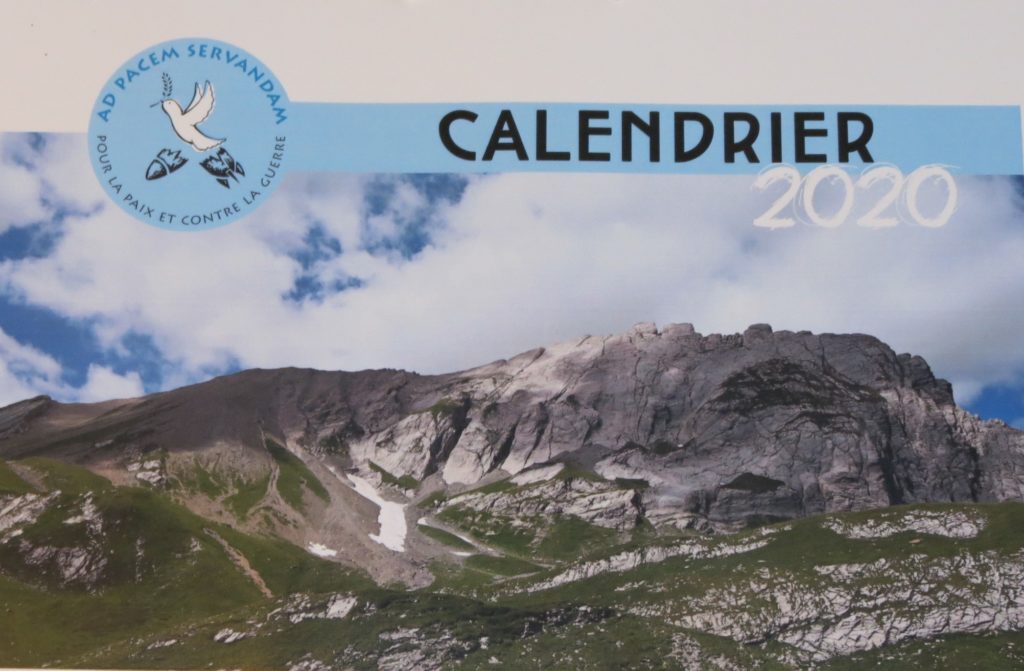
Since the beginning of December it has been sold for 10€ (8€ for students). 100% of the profit goes to the victims of the wars that we help to rebuild their lives. On our website you can see examples of how we are helping them in a concrete way.
If someone still wants to buy a calendar, they can do so by ordering it by phone (+352 621 280 850) or by sending a text message, leaving their name and phone number.
Cultural trip to Alsace
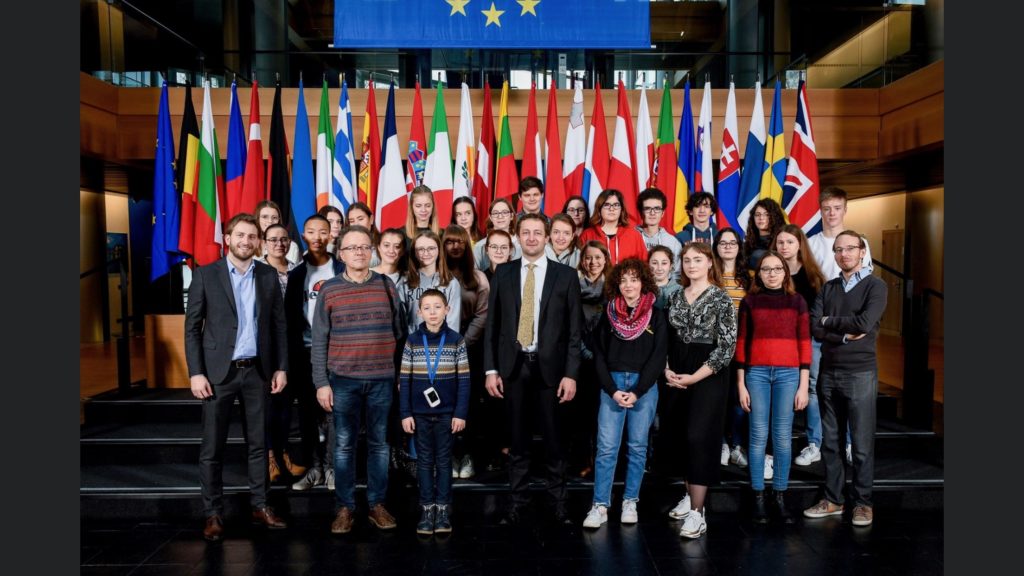
On the 17th and 18th of December 2019 our association “Ad pacem” organized a cultural and educational trip to Alsace. Together with three teachers, twenty-five pupils from the Lycée de Garçons in Esch-sur-Alzette (Luxembourg) visited the Natzweiler-Struthof concentration camp, the Alsace Moselle Memorial in Schirmeck and the European Parliament in Strasbourg.
Visit of the concentration camp
Twenty-five pupils from the Lycée de Garçons d’Esch-sur-Alzette undertook an educational trip to Alsace on 17 December, accompanied by three teachers, Mr Claude Pantaleoni, Mr Christian Welter and Mrs Dora Almeida.
The first stop was a visit to the former Nazi concentration camp of Natzweiler-Struthof south of Strasbourg, where we arrived by bus at about 10.30 am. The whole site is a “national necropolis” where 22,000 people, mostly political deportees and resistance fighters, were murdered because of their opposition to the Nazi system. Many of approximately 400 Luxembourgers who were interned there also lost their lives.
Aid action for refugee children in Dnipro
During the month of November 2019, Ukrainian Caritas in Dnipro, a city of millions in eastern Ukraine, contacted us to ask if we could send clothes, shoes and gifts to be distributed to about 40 refugee children aged 1 to 15 years.
Spontaneously, several members of our association donated clothes, shoes and gifts for this aid action. Two boxes of children’s clothes were given to us by the Red Cross Section of Villerupt (France).
The Greek-Catholic community of Dnipro organizes the help for the families who fled from the pro-Russian occupied territories of Luhansk and Donetsk. All fled for political and/or religious reasons.
On 15 December we sent five large cardboard boxes with a total of 80 kilos to Dnipro, which arrived there on Friday 20 December. Everything was distributed to the children, young people and parents.
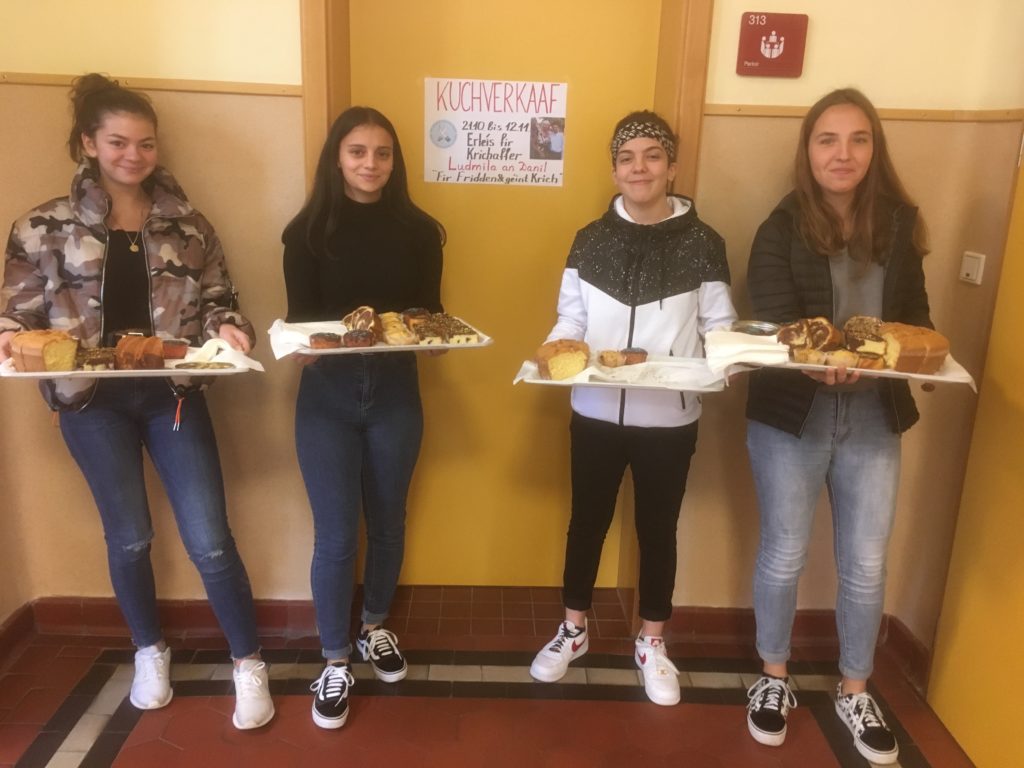
Cake sale at the Lycée de Garçons of Esch-sur-Alzette in favour of war refugees Ludmila and Danil
Students from the Lycée de Garçons d’Esch-sur-Alzette (LGE) in Esch organised the sale of home-made pastries during the breaks from 21 October to 12 November 2019. The proceeds were in favour of Ludmila Bazhenova and her grandson Danil. Both are war refugees from Donetsk (Eastern Ukraine), a city occupied by pro-Russian separatists.
Until the end of October, both were helped by Caritas in Dnipro. This aid organisation has passed on this difficult situation to us, in mid-October, from the seventy-year-old grandmother Ludmila and and her grandson Danil, who is twelve years old. Both fled from Donetsk in 2017 because the family situation had become untenable for the grandmother and the child.
Danil’s mother gave birth to a handicapped child in 2014 during the bombings. The father, not the natural father of Danil, was sent to prison where he was tortured for months by the separatists. During forced labor in the open air he managed to escape and he came back to the family in secret. But, he became so mentally unstable that he constantly beat Danil. The grandmother could not stand this difficult situation any longer, and since she found no help in the occupied zone, she decided to flee with her grandson. They escaped without any problems through unguarded mine-filled fields, into free Ukraine to safety and reached the city of Dnipro.
During the first year, however, all their money reserves evaporated without them being able to stabilize their situation financially. Finally they asked for help from the Greek Catholic community and Caritas. The latter asked us in mid-October if we could help on our part.
In order to guarantee this help for the two refugees, we visited a dozen classes of the LGE, during the subject “Life and Society”, to explain to the students how a war destroys a family in the long term. But we also explained that every student can help this family if they participate in a bake sale. In every class there were students who were willing to help.
During the breaks the students and the teachers could taste delicious cakes for two and a half weeks for 1€ a piece. The sale generated a total of 650€. With this money we will pay Ludmila and Danil the rent of an apartment until April 2020. Until then Caritas hopes to find a way out for the two refugees.
30 years after the fall of the Berlin Wall: Cross-European order of peace between ideas and reality
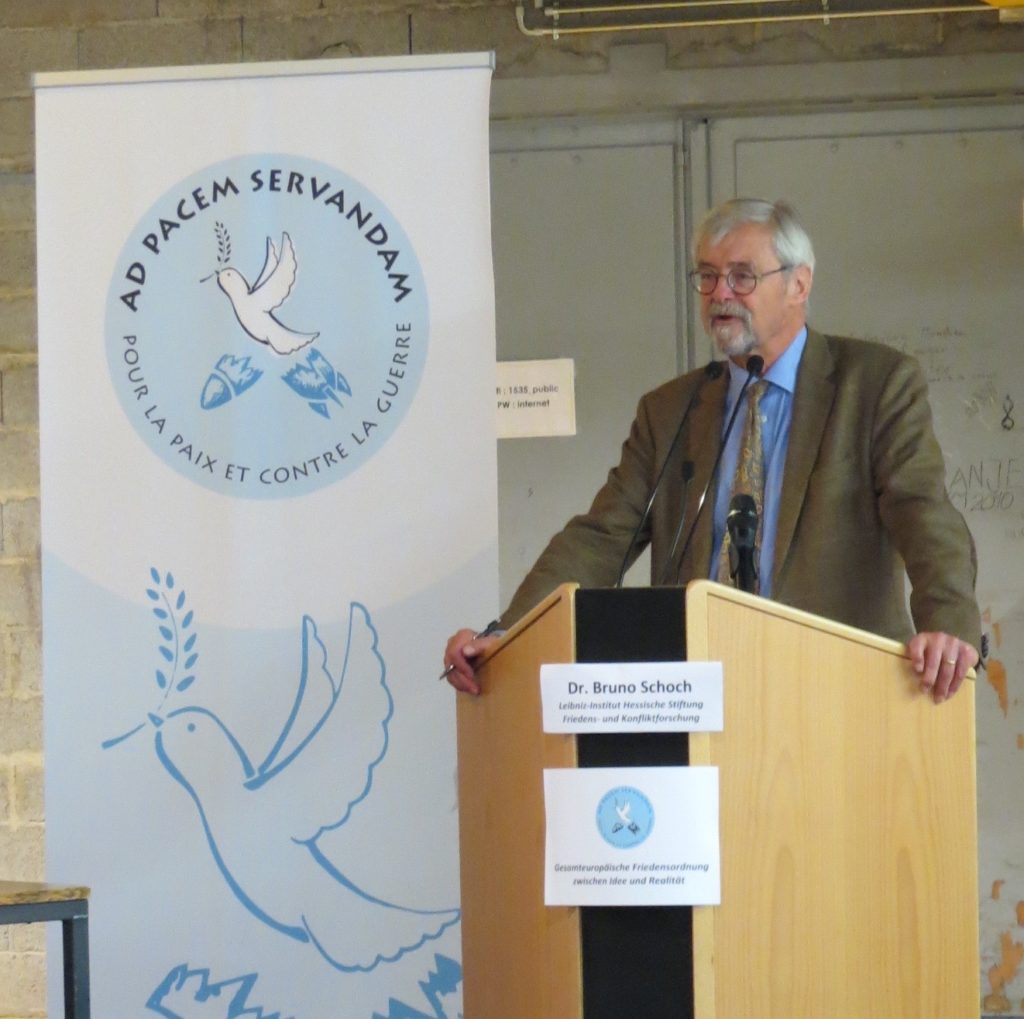
Our conference, entitled “Cross-European order of peace between ideas and reality, organised in the creative Hub 1535° of Differdange, on the morning of the 9th of November was amply visited.
The conference was led in German by Dr. Bruno Schoch, a leading expert and researcher at the Leibnitz and Hessian Institute for peace and conflict research, located in Frankfurt-on-the-Main (Germany).
We also invited a panel of politicians to assist: Luxembourgish MPs from various parties as well as representatives of German political parties will be assisting the conference and participating in the debate.
The following special invitees participated in the debate:
- Ms Tilly Metz, déi Gréng (Green Party)
- Mr Gary Diderich, Déi Lénk (Left Party)
- Mr Sven Clement, Piratepartei Lëtzebuerg (Luxembourg Pirate Party)
- Mr Thomas Barth, European Speaker of the CDU-Fraction in the state parliament of Rhineland-Palatinate (Germany)
- Mr Stefan Thielen, Chief Whip of the CDU-Fraction in the state parliament of Saarland (Germany)
A detailed report about the conference will be available soon on this website.
Cross-European order of peace between ideas and reality
Invitation
Saturday, the 9th of November from 10am to 12 pm,
in the venue “Creative Hub 1535°” in Differdange (115, rue Emile Mark), Luxembourg
We invite all members of our association and all interested people to our conference, followed by a political debate.
The conference is led by Dr. Bruno Schoch, a leading expert and researcher at the Leibnitz and Hessian Institute for peace and conflict research, located in Frankfurt-on-the-Main (Germany). The conference, under the headline ” Cross-European order of peace between ideas and reality”, will be held in German.
We also invited a panel of politicians to assist: Luxembourgish MPs from various parties as well as representatives of German political parties will be assisting the conference and participating in the debate.
So far the following people have confirmed their participation:
- Mr Gary Diderich, Déi Lénk (Left Party)
- Mr Fernand Kartheiser, ADR (centre-right)
- Mr Sven Clement, Piratepartei Lëtzebuerg (Luxembourg Pirate Party)
- Ms Tilly Metz, déi Gréng (Green Party)
- Mr Thomas Barth, European Speaker of the CDU-Fraction in the state parliament of Rhineland-Palatinate (Germany)
- Mr Stefan Thielen, Chief Whip of the CDU-Fraction in the state parliament of Saarland (Germany)
We would be very happy to welcome you to what promises to be a very interesting Saturday morning!
Marching for Peace
Since this Thursday, July 25, 2019, Anselmo Malvetti, member of our association, has started his peace march in Eastern Ukraine. Since the year 2014, in this part of Europe a war against the Russian aggressor is taking place. This war is today largely ignored by the European media.
Anselmo knows Ukraine because he was there in 2013, a year before the outbreak of this war, to bring humanitarian aid to an orphanage in Cherkassy, a city in central Ukraine.
During this trip he also visited with his friends the Crimea, then Ukrainian, which was annexed by Russia in 2014 when the Ukrainian people were demonstrating in the capital, on the Maidan, their desire to turn towards Europe and not Asia.
As a student and a European citizen, Anselmo understood that the Ukrainian people needed Europe’s support on their way to an independent state not subject to Russia. As a pacifist, he shows solidarity with the innocent victims of this war.
He invites anyone interested to join him for a few days’ march for peace in a beautiful landscape. Anyone who wants to support him in his action can make a donation to the victims of this war in Ukraine, whom we support in rebuilding their lives.
This donation can be made by bank transfer to the account IBAN LU28 0099 7800 0064 0276 (CCRALULL) with the mention: Anselmo Malvetti Peace March.
You can follow Anselmo’s progress by logging on to Instagram @eefalt.photography or on Facebook @eefaltontour
To find out more about Anselmo’s motivation to undertake this solidarity action, you can read below, in PDF format, his interview published in the luxemburgish newspaper “Tageblatt” on 19 July 2019.
English translation of our homepage
The original articles of our homepage are written in French and will progressively be translated also in English.
Click HERE if you want to discover our homepage in French.
Visit of Thil’s (F) concentration camp memorial and the Tiercelet mine (F), a production site for the V-1 flying bomb in 1944
On Saturday 26th January 2019, the board of our non-profit organization visited Thil, a small French town located some eight kilometers from Esch-sur-Alzette, with twelve student members of our association to visit the site where in the years 1943-44 the Germans built a concentration camp.
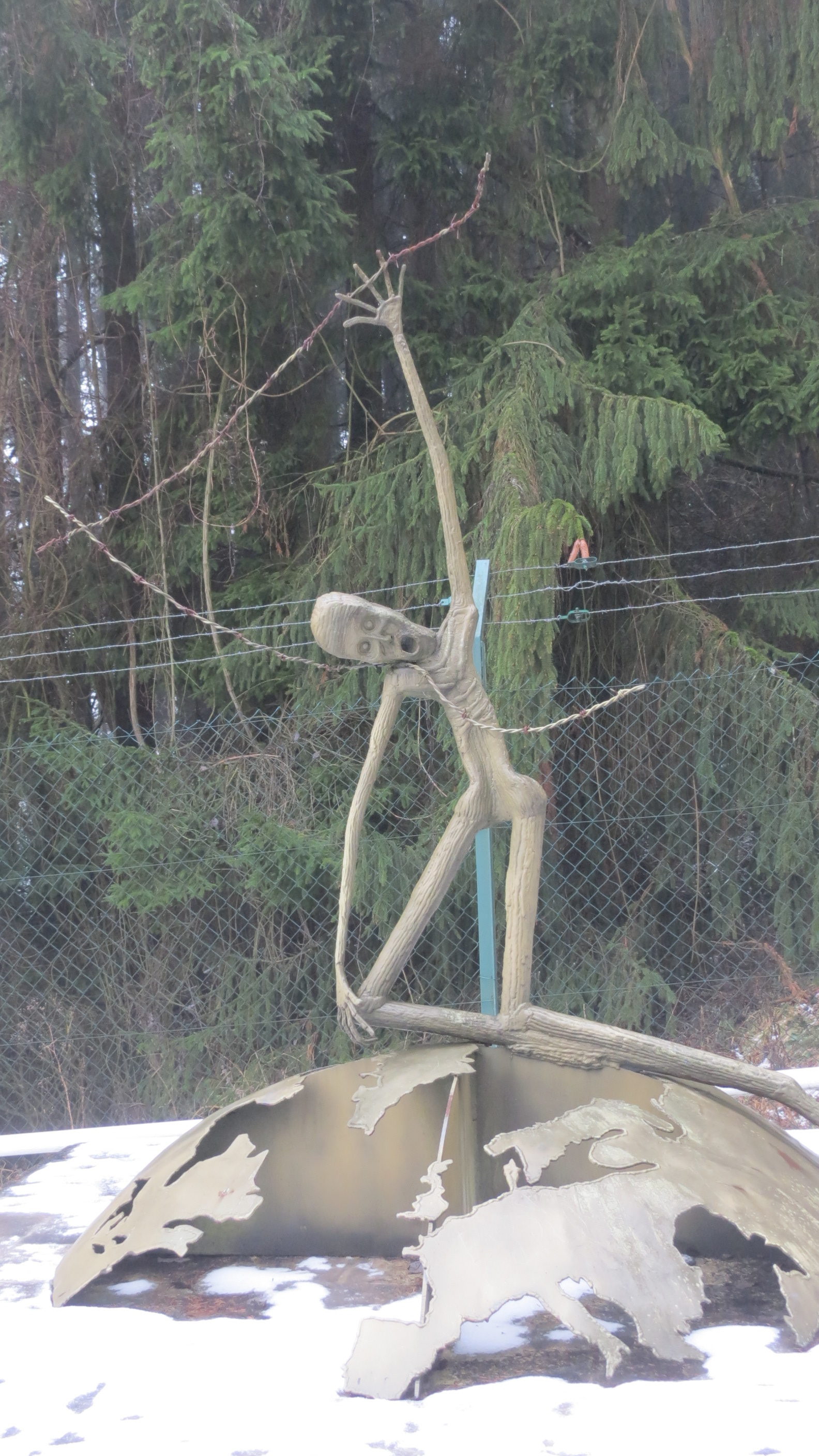
On the path of remembrance which leads from the parking to the crypt, you can see various sculptures representing mankind martyrized by the camp’s barbarity. In the crypt Mr. Gino Bertacco, Thil’s deputy mayor, explained the reasons why the Germans built this camp in 1943 and why it was abandoned in September 1944.
Afterwards we visited the Tiercelet mine (opened from 1885 to 1945). Mr. Daniel Pascolini told us how the camp’s prisoners came to work here every day alongside female soviet prisoners. Their forced labor was destined to build the various components of the V-1 flying bomb.
[expand title=”Touch here to read the complete text about our visit to Thil (F)“]
Sculptures and the Memorial Crypt
We started walking up the crypt from the parking on the path of remembrance. On the way there we listened to the explanations of the deputy mayor who detailed all the evidence proving the existence of the now largely forgotten camp. Starting in the seventies of the 20th century several works of art, depicting the barbarity which occurred on this grounds, have been placed along the way.
In front of the crypt Mr. Bertacco and Mr. Morello explained how construction of the camp started in early 1943. Its design and layout hid it from the surrounding population’s sight. The Germans abruptly abandoned the site in September 1944 when the American forces approached the city of Longwy. During the German occupation of the area, the French citizens of Thil found refuge in the Gironde region, while the inhabitants of Italian descent stayed on site. A lot of Italians worked in the mine alongside the prisoners. A lot of the French people’s homes where looted in their absence. When these people came back from the Gironde after Thil’s liberation, they went to the camp and took everything made out of wood. They used the wood to heat themselves after the war. This is the main reason for the lack of physical remains of the camp. Only two steel posts were found which can now be seen near the entry of the crypt. This is also where you can see an impressive sculpture of a man trapped in barbed wire, he may be trying to get up and escape or be dropping to the ground in exhaustion. This sculpture is the creation of students of the Lycée Jean Macé in Villerupt who donated this piece of art to the site in 1978.
The captives who died in the camp or in the mine were burnt outside the entry of the mine. Petroleum was used to set the bodies on fire. The air stream coming out of the mine kept the flames ablaze. The stench of this procedure could be smelt in the distance. This is why Eugen Walter Büttner, the commanding Nazi officer, requested the bodies to be burnt on bundles of wood on the hill near the camp. A white cross behind the crypt indicates the spot where this happened. But as the stench was still noticeable in the area around, the commanding officer requisitioned an oven from Villerupt’s slaughterhouse. The oven’s original purpose was to burn unusable remains of animals. It was installed near the spot where originally the corpses were burnt. According to the deputy mayor not more than two or three prisoners were burnt in the oven as the American forces were advancing from the west.
Inside of the crypt, Mr. Bertacco explained to us the layout of the camp using a scale model created with the means of aerial pictures taken by the allied forces. On one side of the camp there were the living quarters of the Germans, on the other there were eight barracks. Each barrack accommodated up to 100 prisoners each. The numbers were regularly checked. Each morning the prisoners had to carry a rock to the mine and back to the barracks at night. A drawing done by a former captive shows the prisoners dressed in clothes with grey stripes walking to the mine and carrying a stone. After the war a Luxembourger who was detained at the camp donated his original uniform a museum . This uniform is exhibited in the crypt.
Building the V-1 flying bomb
The camp’s prisoners were mainly trained workers like electricians, machinists, fitter-assemblers, turners etc. Their job was to turn the mine into a production area for the German V-1 flying bomb. At the death of a prisoner, the camp’s SS commander Büttner, had the deceased replaced by a captive from the camp in Natzweiler-Struthof in Alsace.
After the visit of the crypt we drove to the entrance of the Tiercelet mine in Thil where the camp’s prisoners went every day to work alongside the Soviet female prisoners of the nearby camp in Errouville (F). We were greeted by Mr. Daniel Pascolini, who was in charge for our visit alongside Alain Fioritti, Dominique Thénière and Brice Morello, a group of volunteers working to preserve the memory of the historical importance of the mine. They led us through the part of the mine which is accessible to the public.
At the entrance of the mine two commemorative plates, one in French, the other in Russian, commemorate the soviet female prisoners who died in the mine as they were forced to work for the Nazi war machine. Their remains were left under the rocks which killed them.
Equipped with safety helmets we were directed into the mine. The volunteers explained the work the prisoners had to do. Various objects found in the mine are shown along the way. They serve as silent witnesses for the presence of the prisoners from both camps and the SS guards (SS is short for Schutzstaffel, an elite Nazi group) of the Todt organization (a civil and military engineering organization in Nazi Germany).
In the mine we saw a place where a rockslide had happened. On top of the rocks we saw an orthodox cross. Mr. Pascolini explained that at this very location 27 Soviet women were buried alive in a tragic accident while they were building concrete walls to stabilize the area. Their bodies have never been extricated and are still buried under the rocks which claimed their lives.
A cement mixer of the German firm Regulus was found deep down in the mine and dragged out.
Not one V-1 flying bomb has ever been assembled in the mine although some parts were built on the site. We couldn’t visit the underground workshops situated deep inside the mine. This part of the mine has not been secured nor marked out yet and is therefore closed to the general public.[/expand]